


Corticosteroid Injections for Musculoskeletal Pain: What You Should Know
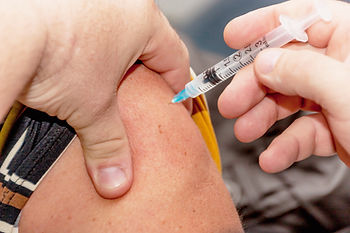
Corticosteroid injections, often called steroid shots or cortisone shots, are one of the most commonly used treatments for musculoskeletal pain. You have probably known someone who had a steroid injection in their knee, shoulder, hip, back, or another painful area and said it either worked wonderfully or did absolutely nothing.
Both experiences are possible. (I should know; I’ve experienced this firsthand. A corticosteroid injection in my shoulder worked wonderfully and provided relief for years, while two separate injections in my elbow provided no relief. This has been my personal experience, and over the years, many of my patients have shared similar stories).
Corticosteroid injections can be very useful, but they are not a cure for every type of musculoskeletal pain. Whether an injection is likely to help depends largely on one important question: What is actually causing the pain?
If inflammation is an important part of the problem, a corticosteroid injection may provide significant relief. If the pain is primarily coming from mechanical dysfunction, tendon degeneration, nerve damage, instability, or another non-inflammatory source, the results may be limited.
What Is a Corticosteroid Injection?
Corticosteroids are medications that mimic some of the effects of cortisol, a hormone naturally produced by the body. Their primary role in musculoskeletal treatment is to reduce inflammation and inflammatory activity.
Several different corticosteroids may be used for injections, including triamcinolone, methylprednisolone, betamethasone, and dexamethasone. The specific medication used may vary depending on the condition and the clinician's preference.
In many cases, the corticosteroid is combined with a local anesthetic such as lidocaine or bupivacaine. This is important because the two medications serve different purposes.
The anesthetic can temporarily numb the area almost immediately. The corticosteroid generally takes longer to work and may reduce inflammation over the following days. That difference can sometimes make an injection useful not only as a treatment, but also as a diagnostic tool. More on this later.
Steroid Injections Help Inflammation—But Not All Pain Is Inflammatory
This is probably the most important concept to understand. Pain does not automatically mean inflammation. Musculoskeletal pain can come from many different sources.
A painful joint may have inflammation, but pain can also result from mechanical degeneration.
A painful tendon may be inflamed, but chronic tendon problems are often more accurately described as tendinopathy or tendinosis, involving changes in the tendon itself rather than simple inflammation.
Pain can also come from a compressed or damaged nerve, a fracture, instability, muscle dysfunction, referred pain, or changes in how the nervous system processes pain.
Because corticosteroids primarily work by reducing inflammatory activity, they tend to be most useful when inflammation is actually part of the problem. This is why two people with what appears to be the same diagnosis may have completely different responses to a steroid injection. One person may have significant inflammation and experience substantial relief. Another may have more degenerative, mechanical, or neurological pain and experience little to no benefit.
What About Nerve Pain?
Steroids do not directly repair a damaged nerve. However, they can sometimes help when inflammation around a nerve or nerve root is contributing to the symptoms.
For example, inflammation associated with a disc herniation may irritate a spinal nerve root and contribute to radicular pain or sciatica. In selected cases, reducing that inflammation may improve symptoms.
On the other hand, a steroid injection is less likely to solve chronic pain caused by permanent nerve damage, peripheral neuropathy, central sensitization, or mechanical nerve compression without a significant inflammatory component.
Where Can Steroid Injections Be Used?
Steroid injections can be administered into several musculoskeletal structures.
Intra-articular corticosteroid injection — injected into a joint
Periarticular corticosteroid injection — injected around a joint
Soft-tissue corticosteroid injection — injected into surrounding tissues
Tendon sheath injection — injected around a tendon
Bursal injection — injected into a bursa
Epidural steroid injection — injected into the epidural space around the spine
Who Can Perform Corticosteroid Injections—and Does It Matter Who Does It?
Depending on the location of the injection, corticosteroid injections may be performed by family medicine physicians, primary care physicians with procedural training, sports medicine physicians, orthopedic surgeons, rheumatologists, pain medicine physicians, radiologists, and other appropriately trained and licensed clinicians.
Physician assistants and nurse practitioners may also perform certain injections depending on their training, supervision requirements, scope of practice, and state law.
In other words, the letters after someone's name do not automatically determine whether they are the best person to perform an injection. Experience, training, diagnostic ability, familiarity with the anatomy, and the ability to accurately target the intended structure matter more than the specialty listed on the office door.
Primary care and family medicine clinicians commonly perform many relatively straightforward musculoskeletal injections. The American Academy of Family Physicians specifically recognizes joint and soft-tissue injections as part of musculoskeletal care in primary care, while also identifying situations where referral to sports medicine, orthopedics, or pain medicine may be more appropriate.
Is an Ultrasound-Guided Injection Better Than a Landmark-Guided Injection?
A landmark-guided injection uses anatomical landmarks and the clinician's knowledge of anatomy to guide needle placement.
An ultrasound-guided injection allows the clinician to visualize the needle and surrounding structures in real time.
Neither approach is automatically necessary for every injection.
For many common and easily accessible structures, experienced clinicians can perform landmark-guided injections effectively. For example, knee injections are commonly performed using anatomical landmarks, although ultrasound can improve accuracy and may improve outcomes in some circumstances.
However, ultrasound guidance becomes particularly useful when the target is deeper, smaller, difficult to locate, or located near important nerves, blood vessels, or tendons.
Current guidelines conclude that ultrasound guidance generally improves the accuracy of intra-articular needle placement compared with landmark-guided techniques. Image guidance may also reduce procedural pain, improve patient satisfaction, and improve short-term outcomes, although improved accuracy does not necessarily translate into better long-term results for every condition.
This is an important distinction. More accurate does not always mean dramatically better long-term pain relief.
If a landmark-guided injection reliably reaches the intended structure, adding ultrasound may not substantially change the outcome. But when the target is difficult to access, or when missing the target could affect the diagnosis or increase the risk of injury, image guidance becomes more valuable.
When Should Someone Consider a Corticosteroid Injection?
A corticosteroid injection is often worth considering when there is a reasonably clear diagnosis and inflammation appears to be contributing significantly to the patient's symptoms.
It may also be useful when pain is severe enough to interfere with sleep, work, daily activities, or participation in rehabilitation.
Sometimes the goal is not simply to eliminate pain. Instead, an injection may create a temporary window of opportunity.
For example, a patient with severe shoulder pain may be unable to participate effectively in physical therapy because nearly every movement is painful. If an injection reduces the pain enough to restore motion and allow strengthening exercises, the injection may help the patient make progress that would have otherwise been difficult.
This is often where steroid injections make the most sense: as part of a larger treatment plan rather than the entire treatment plan.
Steroid Injections Can Be Both Therapeutic and Diagnostic
One of the more interesting uses of injections is their ability to provide information about where pain may actually be coming from.
Imagine someone has hip pain, but it is unclear whether the pain is coming from the hip joint itself, the lumbar spine, the sacroiliac region, or tissues surrounding the hip.
An injection containing local anesthetic can sometimes help answer that question.
If the suspected structure is accurately injected and the patient's familiar pain immediately improves, that provides evidence that the injected structure may be contributing significantly to the symptoms.
The immediate relief is primarily due to the local anesthetic, not the steroid. The steroid generally takes longer to produce its anti-inflammatory effects.
For example, if a patient has severe shoulder pain and receives an accurately placed injection containing anesthetic, a significant reduction in pain shortly afterward may support the idea that the injected structure is an important pain generator.
Then, over the next several days, the steroid may or may not provide additional improvement by reducing inflammation.
This creates several possible responses.
If there is immediate improvement followed by longer-lasting relief, both the anesthetic and the anti-inflammatory effects may have been helpful.
If there is immediate relief but the pain quickly returns, the injection may still have provided useful diagnostic information even if the long-term therapeutic benefit was limited.
If there is little immediate or delayed improvement, several possibilities exist. The injected structure may not be the primary source of pain, the condition may not be particularly responsive to steroids, or the medication may not have adequately reached the intended target.
For this reason, injections should not be interpreted in isolation. They are one piece of information that should be considered along with the patient's history, examination, imaging when appropriate, and overall clinical picture.
When Might a Steroid Injection Not Be the Best Option?
A steroid injection may not be the best first choice when the primary problem is something that steroids cannot correct. For example, a steroid injection will not heal a fracture, repair a complete tendon tear, correct significant joint instability, or reverse advanced mechanical damage.
Steroid injections should also generally be avoided when infection is suspected.
Likewise, repeated steroid injections may not be the ideal approach for tendinopathy. A tendon problem that has developed over months or years may involve changes in tendon structure rather than ongoing inflammation. While an injection may temporarily reduce pain in some situations, repeatedly suppressing symptoms without addressing tendon capacity, loading tolerance, and contributing mechanical factors may not provide the best long-term outcome.
The key is to treat the problem causing the pain, rather than simply treating the fact that pain exists.
What Are the Common Side Effects?
Most corticosteroid injections are well tolerated, but they are not completely without risk.
One of the more common short-term effects is a temporary increase in pain after the injection, sometimes called a "steroid flare". The area may become more painful or irritated for a day or two before improving.
Local skin changes can also occur, particularly when injections are given close to the surface of the skin. These may include skin thinning, lightening of the skin, or localized loss of fatty tissue.
Some patients also experience temporary facial flushing or a sensation of warmth.
Bleeding and bruising can occur as well, particularly in patients taking medications that affect blood clotting.
People with diabetes should be particularly aware that corticosteroid injections can temporarily increase blood glucose levels. The effect varies depending on the person, the medication used, and the dose.
Infection is uncommon, but it is one of the most serious potential complications. Increasing redness, warmth, severe swelling, fever, or rapidly worsening pain following an injection should be medically evaluated.
What Happens With Repeated or Long-Term Steroid Use?
The risks become more important when injections are repeated frequently. A single appropriately indicated injection is very different from receiving repeated injections into the same joint or tendon year after year.
Repeated corticosteroid exposure may have negative effects on tissues, including cartilage and tendons. This is why clinicians generally become more cautious when patients require frequent repeat injections into the same area.
There has been concern that repeated intra-articular steroid injections may contribute to cartilage damage or progression of joint degeneration in some circumstances. The risk is likely influenced by factors such as the dose, frequency of injections, the specific joint, and the underlying condition.
How Often Can You Get a Steroid Injection?
There is no single number that applies to everyone.
You may hear rules such as "no more than three or four injections per year," but there is no universal limit that applies equally to every joint, every condition, and every patient.
Instead, the decision should depend on several factors.
How much benefit did the previous injection provide? How long did the benefit last? What tissue is being injected? Is the patient using the injection as part of a broader treatment plan, or are injections simply being repeated every time the pain returns?
If a patient receives significant relief from an injection that lasts many months, the risk-benefit calculation may be different than someone who receives only a few weeks of relief and returns repeatedly for another injection.
Many clinicians prefer to space repeat injections and limit frequent injections into the same structure because of concerns about cumulative effects on cartilage, tendons, and other tissues.
If injections are repeatedly needed just to maintain the same level of function, it may be time to reconsider the diagnosis or explore other treatment options.
Steroid Injections Should Have a Purpose
The best way to think about a corticosteroid injection is not as simply a "pain shot." A well-chosen injection should have a specific purpose.
Sometimes that purpose is to reduce inflammation and pain so a patient can sleep, work, or return to rehabilitation.
Sometimes it is to help determine whether a particular joint, tendon sheath, bursa, or other structure is actually responsible for the patient's symptoms.
And sometimes an injection may simply not be the right tool for the problem.
Corticosteroid injections can be extremely helpful when the correct structure is targeted and inflammation is an important part of the patient's pain. But they are less likely to provide lasting benefit when the primary problem is mechanical, degenerative, or neurological without a significant inflammatory component.
Perhaps the most important point is that an injection should not be viewed as either good or bad.
It is a tool. Like any tool, its value depends on whether it is being used for the right problem, at the right time, and in the right way.
When used strategically, a corticosteroid injection may reduce pain, improve function, provide valuable diagnostic information, and create an opportunity for rehabilitation and recovery.
When used repeatedly without addressing the underlying cause of the problem, however, it can become little more than temporary symptom management, and may expose the patient to unnecessary risks.
References
American Academy of Orthopaedic Surgeons. Cortisone Shot (Steroid Injection). AAOS OrthoInfo
American Society of Regional Anesthesia and Pain Medicine and collaborating societies. Use and safety of corticosteroid injections in joints and musculoskeletal soft tissue. Guideline publication
American Academy of Family Physicians. Joint and Soft Tissue Injections. AAFP clinical review
National Institute for Health and Care Excellence. Low Back Pain and Sciatica in Over 16s: Assessment and Management. NICE guideline
Kamel SI, et al. Local and Systemic Side Effects of Corticosteroid Injections for Musculoskeletal Indications. PubMed record
Comments